Kindergarten in Kanpur: Confidence for the Next Learning Chapter
Parents considering Kindergarten in Kanpur want to know how their child will develop language, early maths, curiosity and independence before moving to the next stage of schooling. A thoughtful kindergarten programme does more than prepare children to complete worksheets. It helps them ask questions, share ideas, cooperate with others and feel comfortable learning new things.
Candy Floss Preschool in Pandu Nagar lists Kindergarten as the fourth stage in its early-learning pathway. Its published programme overview describes an approximate 5–6 year age band, with reading games, simple sentences, number stories, science-based discovery, show-and-tell, drama and presentation. Confirm the school's current 2027–28 eligibility rules separately.
What the Candy Floss Kindergarten Programme Describes
The school presents Kindergarten as a stage where early language and maths become more purposeful while children continue to develop communication, imagination and confidence. These broad learning strands should appear in everyday activities, not only in promises about school readiness.
Reading games and meaningful language
The published outline mentions reading and writing simple sentences. Ask how children connect sounds, printed words and personal experiences, whether books and conversations remain central, and how educators support learners who are developing at different paces. Early literacy should help children express and understand meaning.
Number stories and real mathematical thinking
Mathematical ideas become more understandable when children handle objects, tell number stories, compare groups and explain patterns. Ask the school how its basic maths games encourage children to solve problems rather than memorise answers without context.
Science-inspired curiosity
Candy Floss describes discovery activities around topics such as plants and weather. This is an opportunity for children to observe, ask questions, make guesses and discuss changes. A useful school visit question is how an investigation becomes a conversation, drawing, story or collaborative activity.
Show-and-tell, drama and confidence
Show-and-tell and simple presentations can encourage children to organise thoughts and speak to others. Not every child wants to stand in front of a group immediately; ask how teachers give quieter children supportive ways to participate.
Nursery and Kindergarten: how the published learning progresses
Candy Floss presents Nursery and Kindergarten as consecutive stages. Here is a concise comparison from its published programme descriptions, distinct from the national Foundational Stage policy.
| Area | Nursery (published 4–5) | Kindergarten (published 5–6) |
|---|---|---|
| Language | Letters, tracing, visual storytelling | Reading games, simple sentences, show-and-tell |
| Early mathematics | Counting blocks, matching, sequencing | Number stories and basic maths games |
| Expression | Creative art and role-play | Drama, presentation and discovery activities |
| Classroom progression | Exploring and recognising early concepts | Applying concepts and communicating ideas |
Interpretation note: The Government of India's Foundational Stage covers ages 3–8 and includes preschool through Grade 2 as a curricular structure. That broad policy is not an official Candy Floss 2027–28 admission cut-off.
Sources: Candy Floss published Programs · Ministry of Education / PIB official information Checked 7 November 2026; admission details require school confirmation.
School Readiness Is Bigger Than Academics
As children approach primary school, it can be tempting to judge a programme by the number of pages completed. Readiness also includes listening, managing a familiar routine, asking for help, working with others, practising independence and responding to new situations. These skills develop over time and are best observed in different contexts.
Ask teachers what they prioritise when a child needs encouragement, has a different communication style or learns more comfortably through practical tasks. An effective programme should be able to explain both its educational objectives and the ways it supports individual differences.
What to Observe During a Kindergarten Visit
Children participating, not just watching
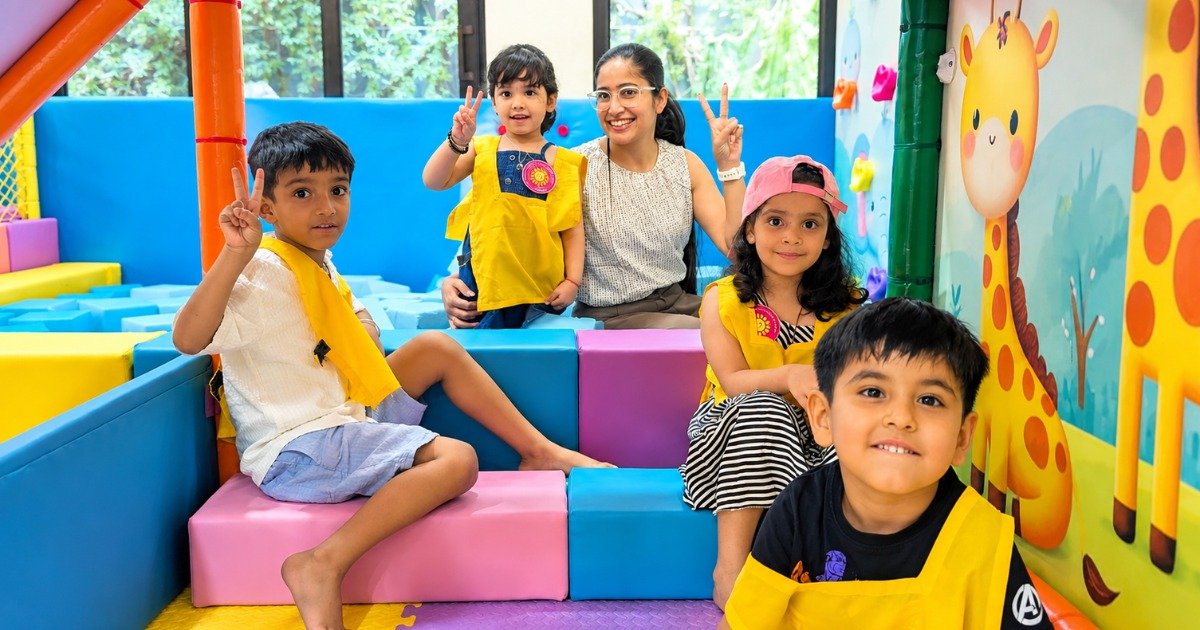
Look for genuine opportunities for children to handle materials, tell stories, make things, move around or ask questions. Find out how classroom activities change across a week and how the school balances teacher-guided work with choice and exploratory play.
Evidence of thoughtful instruction
Ask to see a recent learning activity and hear what the teacher hoped children would understand. For example, a weather observation might lead to conversation, picture making, sorting or counting. Specific examples are more persuasive than statements about a 'world-class curriculum'.
Wellbeing, friendship and support
Observe the way children speak with adults and each other. Ask how staff help with classroom disagreements, routine transitions and children who need a quieter space or additional reassurance.
Communication with parents
Ask how the school explains progress, listens to family concerns and prepares children for the next stage. A written document may be useful, but real conversations about the child's experience matter just as much.
From Nursery to Kindergarten: How the Learning Changes
In Candy Floss's published programme outline, Nursery includes letter and number recognition, visual storytelling, sequence games, tracing, creative art and group play. Kindergarten builds on these experiences with reading games, simple sentences, number stories and more opportunities to present and discuss discoveries.
This does not mean every Nursery child must arrive in Kindergarten already reading or writing independently. Parents should ask what the school considers appropriate for the actual group, how children are supported and how the admission stage is determined under the current policy.
Everyday Activities Families Can Enjoy Together
Read picture books and invite your child to describe a favourite character. Explore numbers while setting a table or sorting toys. Notice clouds, leaves or changes in weather and talk about what you see. Let children draw an observation or explain a small discovery in their own words.
These activities are opportunities to talk and explore, not examinations. Keep the experience positive and avoid turning family time into constant preparation for a school test. If the school offers suggestions based on your child's needs, consider them alongside what is enjoyable and manageable at home.
Questions About Transition Beyond Preschool
Parents often want reassurance about the next school stage. Ask how Candy Floss supports independence, language, early concepts and cooperative learning without making unsupported promises about future admissions elsewhere. Also ask what information about a child's progress is shared with families and whether there are opportunities to discuss a transition.
No preschool can guarantee a particular child's development or placement. What matters is a transparent programme, age-appropriate teaching, reliable family communication and realistic expectations.
Kindergarten Admissions for 2027–28
Before applying, verify the official age cut-off date, the school's Kindergarten grouping, registration timetable, required documents, written fees and any school-visit appointment process. The published programme's approximate age band is a guide, not a substitute for current eligibility confirmation.
If you are deciding among different schools in Kanpur, use the same observation questions at each visit. Compare the quality of conversations with educators, everyday classroom experiences and the practical fit for your family.
Quick answers to real preschool decisions
Short, specific answers for families comparing programmes in Kanpur or moving from another Indian city. School-specific dates, availability and fees should always be confirmed directly.
What is the difference between Kindergarten, LKG and UKG in India?
Kindergarten is a broad term; LKG and UKG are class names used by many schools. Candy Floss's website describes a Kindergarten stage, but its exact internal group names and entry ages should be confirmed directly.
At what age does Class 1 typically begin under NEP 2020?
The policy's Foundational Stage spans ages 3–8, with three preschool years followed by Grades 1 and 2, and Class 1 generally aligned with age six. Individual school admission rules and applicable local directions still need checking.
Should a Kindergarten child already read full books?
Children progress differently. Ask what the current programme teaches through reading games, picture books and meaningful conversation; do not assume a fixed reading milestone for every child.
How can a child learn science in Kindergarten?
Simple observations of plants, weather, water or everyday objects can support questions, comparisons and discussion. Candy Floss lists plant and weather discovery as examples in its Kindergarten overview.
Are oral interviews the right way to test a preschool child?
The national Foundational Stage framework favours developmentally appropriate observation rather than high-pressure academic testing. Ask the specific school to explain any admission interaction and its purpose.
How can parents support a transition to primary school?
Build independence through everyday routines, read and talk together, encourage questions and communicate with teachers. Avoid treating school readiness as only handwriting speed or memorised answers.
Kindergarten FAQs for Kanpur Parents
Is Kindergarten the same as LKG or UKG?
Naming and grouping differ across schools. Candy Floss publishes Kindergarten as a programme; confirm the specific class grouping and current eligibility directly with its admissions office.
Does Candy Floss include early reading and writing?
Its published Kindergarten outline includes reading games, worksheets and simple sentences, alongside maths games, discovery, presentation and drama. Ask how these activities are taught in the current class.
What if my child is not yet confident speaking in a group?
Children vary in confidence. Ask teachers how they offer supportive participation opportunities and communicate with families about individual needs.
How can I compare Kindergarten classrooms?
Observe interactions and materials, request concrete examples of learning, discuss routines and ask how staff support children who need more time. The parent school-visit checklist provides a repeatable framework.
Where are the current fees and age requirements?
Request the latest 2027–28 written admissions information from Candy Floss. Avoid relying on old directory estimates.