Playgroup in Kanpur: A Gentle First Step into School
For many families, Playgroup is the first time a child begins spending part of the day learning alongside children outside the home. A good start is not measured by how quickly a child recites letters. It is about feeling secure with trusted adults, discovering new activities, experimenting with words and gradually becoming comfortable with shared routines.
Candy Floss Preschool in Pandu Nagar lists Playgroup among its four early-learning programmes. Its current published programme overview describes an approximate 2–3 year age band, with movement, sensory play, music and simple group routines. These are programme descriptions, not confirmation of eligibility for the 2027–28 session.
What Children Experience in the Candy Floss Playgroup
The school describes early learning through a combination of movement, sound, touch and social interaction. It lists music and movement games, safe messy play using materials such as paint or dough, object naming, flashcards and circle-time rhymes. These everyday experiences give parents concrete starting points for a classroom conversation.
Music, movement and coordination
Movement games allow children to follow a rhythm, move freely and experiment with balance. Songs introduce familiar words and sequences without turning the activity into a formal test. During a visit, ask whether children can participate at their own pace, how quieter children are included and how staff manage active spaces.
Sensory discovery with safe materials
Paint, dough and tactile play can encourage curiosity and fine-motor exploration. A useful question is what children are free to make or investigate, and how teachers keep sensory materials appropriate for the group. Ask for actual examples rather than assuming every school advertises the same activities.
Words, names, pictures and stories
Object naming, simple language games, rhymes and shared storytelling introduce vocabulary in context. Watch how teachers listen and respond, including when children speak little or communicate through gestures. The objective is meaningful communication, not pressure to perform.
Small social moments
Joining a group, waiting briefly, watching another child and asking for an object are all opportunities to practise early social skills. Young children need adult guidance in these moments. Ask how conflicts, discomfort and transitions are handled compassionately.
Playgroup at a glance: activities, purposes and parent checks
Candy Floss's published Play Group overview emphasises sensory, social and language exploration, not a formal academic entrance test. The following table separates published activities from the development questions parents can discuss on a visit.
| Published Play Group activity | Early experience it supports | What a parent can ask |
|---|---|---|
| Music and movement games | Listening, coordination and shared enjoyment | How do quieter children join in? |
| Safe paint or dough play | Touch, exploration and fine-motor practice | How are materials selected and supervised? |
| Flashcards and object naming | Recognising familiar objects and words | How are children encouraged to respond naturally? |
| Circle-time rhymes | Language, group participation and repetition | How do teachers support hesitant children? |
Interpretation note: Published Play Group band: approximately 2–3 years. These are school-described activities, not proof that every activity occurs daily or a binding 2027–28 admission condition.
Sources: Candy Floss published Programs · Ministry of Education / PIB official information Checked 7 November 2026; admission details require school confirmation.
The First Few Weeks: Settling In Without Pressure
Separation can feel unfamiliar to both the child and the parent. It is reasonable to ask the school how new children are welcomed, whether adults respond to distress and what the family should do if a child needs additional reassurance. A considerate approach recognises that children adjust at different rates.
Before the first day, practise a calm morning routine, talk about school using familiar words and let your child explore short periods of independent play. Avoid promising that they will never feel upset. Instead, explain that a trusted adult will be there and you will reconnect later.
Share relevant information about your child's communication style, routines and concerns directly with the school. Specific staff procedures, timings and adjustment practices should be confirmed during your visit because they may differ by session.
How to Evaluate a Playgroup Classroom
Observe the adult-child relationship
Do adults welcome children at their level? Can a child seek reassurance? Are staff attentive to a range of personalities? The warmth and responsiveness of real interactions matter more than a perfectly staged photograph.
Look at the learning materials
Playgroup spaces should have opportunities for movement, imagination and sensory discovery that suit the children using them. Ask how materials are selected, supervised, cleaned and adapted for different abilities.
Understand the daily rhythm
Ask about welcome time, play, songs, breaks, practical care routines and communication with parents. The precise schedule should come from Candy Floss staff; an online illustration should not be mistaken for the current timetable.
Discuss care and safety in practical terms
Who is authorised to collect your child? What if a child becomes unwell? How are parents contacted? What hygiene practices apply to the Playgroup classroom? These concrete questions are more useful than general safety promises.
Is Playgroup the Same as Lower Nursery?
No. Candy Floss lists Playgroup and Lower Nursery as separate stages. Its published programme overview emphasises early sensory and social exploration in Playgroup, followed by growing language, shape-and-colour recognition and pretend play in Lower Nursery. The progression is gradual; children do not need to master every listed activity before taking the next step.
The school's published overview shows Playgroup at approximately 2–3 years and Lower Nursery at 3–4 years, but specific cut-off dates and the 2027–28 eligibility policy must be verified with the admissions team. Use readiness and current rules together, not age alone.
What Parents Can Do at Home
You do not need to recreate a school classroom. Singing familiar songs, naming objects during everyday routines, reading picture books, drawing freely and allowing age-appropriate hands-on play all create chances to practise communication and curiosity.
Follow your child's interests and keep the experience enjoyable. The goal is not to deliver a curriculum before school starts; it is to build a trusting conversation with your child and with future educators.
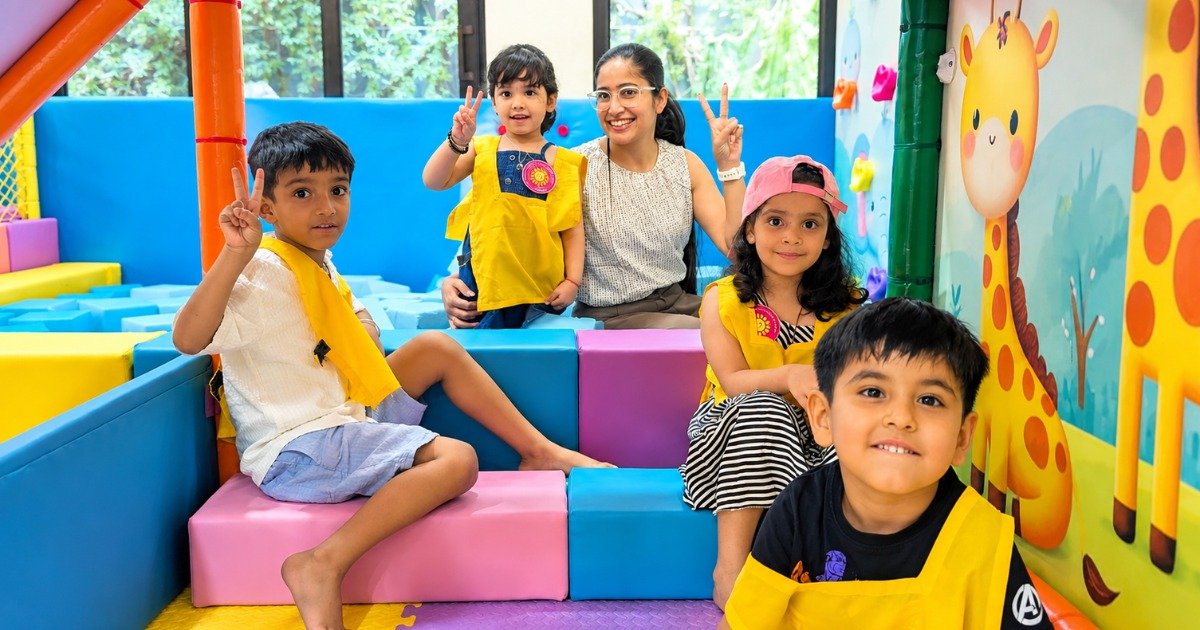
Use actual school photographs as a conversation starter, then verify the current Playgroup environment and staff during a campus visit.
Playgroup Admission in Kanpur: What to Confirm for 2027–28
Ask whether the child meets the current age requirement on the school’s official cut-off date, when applications open, what documentation is required and whether school visits are available. Also discuss full fees, what is included, any refundable or non-refundable amounts and how families receive confirmation of registration.
Because older web pages and directories may use different academic sessions, rely on the school's current written information rather than a screenshot, a third-party estimated fee or an outdated online calendar. Candy Floss’s dedicated admissions page is the intended starting point for enquiries.
Quick answers to real preschool decisions
Short, specific answers for families comparing programmes in Kanpur or moving from another Indian city. School-specific dates, availability and fees should always be confirmed directly.
Can my 2-year-old join Playgroup in India?
Schools use different admission dates and age rules. Candy Floss publishes a Play Group band of about 2–3 years; confirm your child's eligibility against its official 2027–28 cut-off date.
Does a child need to be fully toilet-trained before preschool?
There is no safe universal answer for every preschool. Ask the school for its current care policy and discuss the child's individual needs privately with the admissions or classroom team.
How can working parents help a child settle into Playgroup?
Agree on a realistic arrival routine, speak with the school about adjustment and share reliable parent contact details. Consistent, calm conversations and age-appropriate play at home can help.
What if my child speaks Hindi at home and is learning English?
A child's home language is a useful learning resource. Ask how teachers communicate with multilingual children and families; avoid treating English-only speech as the sole measure of readiness.
Should Playgroup have homework or formal tests?
The national Foundational Stage approach emphasises playful, age-appropriate learning. For an individual school, ask how progress is observed and communicated rather than assuming frequent worksheets or tests are necessary.
What are the signs of a supportive Playgroup classroom?
Look for responsive adults, appropriate play materials, gentle transitions, clear care procedures and realistic answers to questions about children who need additional reassurance.
Frequently Asked Questions About Playgroup
What is the suitable age for Playgroup at Candy Floss?
The current published programme overview describes approximately 2–3 years. The exact 2027–28 age cut-off and admission policy need to be confirmed directly with the school; the published age band alone does not establish eligibility.
Does a child need to know the alphabet before starting?
No particular prerequisite should be assumed from a general web guide. The school's published Playgroup description focuses on movement, sensory exploration, naming and simple routines. Ask the teachers what they expect at entry.
What if a child cries at separation?
Many children need reassurance during transitions. Ask how the current classroom team supports the settling-in process, when parents receive updates and what adjustments are possible.
Can families observe the learning space before joining?
Request a school visit through the admissions contact and ask to see the relevant Playgroup areas, activities and care routines in person.
Which programme comes after Playgroup?
Lower Nursery is the next stage described in Candy Floss's published programme structure. Progression depends on current policy and the child's needs; review that programme separately.